“Both are popular cola soft drinks, but they have slightly different flavors. Pepsi is often described as sweeter, while Coke has a more pronounced cola flavor. The better choice depends on your personal taste”.
Imagine sitting with friends on a hot afternoon. Someone brings a cold bottle of Pepsi, while another person opens a bottle of Coca-Cola. Both drinks are dark, fizzy, and refreshing. Yet, each person at the table may have a different favorite. One person may prefer Pepsi because it tastes sweeter, while another may choose Coke because it has a stronger cola flavor.
This familiar choice has created one of the most famous brand rivalries in the world. Pepsi and Coca-Cola are both popular carbonated soft drinks, but they are not exactly the same. Their flavors, ingredient lists, nutrition facts, and brand histories have some important differences.
So, when comparing Pepsi or Coke, which one is better? The answer depends on what you care about most. You may prefer the taste of one drink, want to compare sugar and caffeine, or simply want to understand how these two famous colas differ.
In this guide, we will compare Pepsi and Coke in simple English. You will learn about their taste, ingredients, nutrition, history, and common questions. By the end, you will understand the main differences and be able to choose the drink that suits your preferences.
Read More: Site or Cite: Which Word Is Correct?
Quick Answer: Pepsi or Coke?
Pepsi and Coke are both cola soft drinks, but they have different flavor profiles and product formulas.
- Pepsi: Often described as sweeter, brighter, and more citrus-forward.
- Coke: Often described as having a balanced cola taste, noticeable fizz, and a more complex flavor.
- Sugar and calories: The amounts depend on the country, serving size, and product version.
- Caffeine: Both regular drinks contain caffeine, but the exact amount can differ.
- Best choice: Neither is best for everyone. Your personal taste and nutritional preferences matter.
The simplest way to choose is to try both at the same temperature and compare their sweetness, fizz, and aftertaste.
What Is Pepsi?
Pepsi is a carbonated soft drink made by PepsiCo. It is sold in many countries and is available in different versions, including regular Pepsi and sugar-free varieties.
The drink began in the United States in the late nineteenth century. Pharmacist Caleb Bradham first created a beverage called Brad’s Drink in 1893. He renamed it Pepsi-Cola in 1898.
Over time, Pepsi became one of the best-known cola brands. Its marketing has often focused on entertainment, music, sports, and younger consumers.
Regular Pepsi usually contains carbonated water, sweeteners, caramel color, acids, caffeine, and flavorings. However, the exact ingredients depend on the market. For example, the sweeteners used in one country may differ from those used in another.
Pepsi is often known for its sweet and lively taste. Some people notice citrus-like notes, while others mainly notice its sweetness. These descriptions are useful when comparing the drinks, but individual taste preferences can vary.
What Is Coke?
Coke is the common name for Coca-Cola, a cola soft drink produced by The Coca-Cola Company.
Coca-Cola was introduced in 1886 by pharmacist John Stith Pemberton in Atlanta, Georgia, in the United States. It grew into a major international brand and is now sold in many countries.
Regular Coca-Cola generally contains carbonated water, a sweetener, caramel color, phosphoric acid, natural flavorings, and caffeine. The exact ingredient statement depends on the product and country.
Coca-Cola is often described as having a classic cola flavor with a balance of sweetness, acidity, spice-like notes, and carbonation. Some people find it less sweet-tasting than Pepsi, although this is not a universal rule.
The Coca-Cola brand also offers products such as Coke Zero Sugar and other regional varieties. These drinks have different formulas and should not be treated as identical to regular Coca-Cola.
Pepsi vs Coke: Main Differences
The easiest way to compare Pepsi and Coke is to look at their main features side by side.
| Feature | Pepsi | Coke |
| Full brand name | Pepsi | Coca-Cola |
| Type | Cola soft drink | Cola soft drink |
| Origin | United States | United States |
| First introduced | 1890s; named Pepsi-Cola in 1898 | 1886 |
| Taste often described as | Sweeter and brighter | Balanced, complex cola flavor |
| Main ingredients | Carbonated water, sweeteners, caramel color, acids, flavorings, and usually caffeine | Carbonated water, sweetener, caramel color, phosphoric acid, flavorings, and usually caffeine |
| Sugar-free options | Yes, including Pepsi Zero Sugar in some markets | Yes, including Coke Zero Sugar |
| Caffeine | Usually present in regular Pepsi | Usually present in regular Coke |
| Best choice | Depends on personal preference | Depends on personal preference |
Important: This table describes general product characteristics. Ingredient lists and nutrition facts may differ by country and product version. Always check the label on the bottle or can you are buying.
1. Pepsi or Coke: Which Tastes Better?
Taste is one of the biggest reasons people choose Pepsi or Coke. Both drinks are sweet, fizzy colas, but many people notice differences when they try them side by side.
Pepsi taste
Pepsi is often described as having a sweet, bright, and refreshing flavor. Some people notice citrus-like notes, especially when drinking it cold.
Its sweetness may stand out at the beginning of a sip. People who enjoy a sweet cola may find this flavor appealing.
However, not everyone experiences Pepsi in the same way. Temperature, serving size, food, and personal taste can affect how sweet the drink seems.
Coke taste
Coke is often described as having a balanced and complex cola flavor. Some people notice a stronger combination of spice-like, caramel-like, and acidic notes.
Its carbonation can also affect the drinking experience. Some people enjoy the way the bubbles and flavor work together.
Others may prefer a sweeter drink and choose Pepsi instead.
Which tastes better?
There is no single answer that applies to everyone. A person who enjoys sweeter flavors may prefer Pepsi, while someone who likes a different balance of cola notes may prefer Coke.
A simple blind taste test can help you decide. Pour both drinks into similar glasses without showing their labels. Keep them at the same temperature and take small sips of each. Compare the sweetness, fizz, and aftertaste.
This method helps you focus on the drinks rather than the brand names.
2. Pepsi vs Coke: Which Has More Sugar?
Sugar is another common reason people compare Pepsi and Coke.
Both regular drinks can contain substantial amounts of sugar. However, the exact quantity depends on the recipe, country, and serving size.
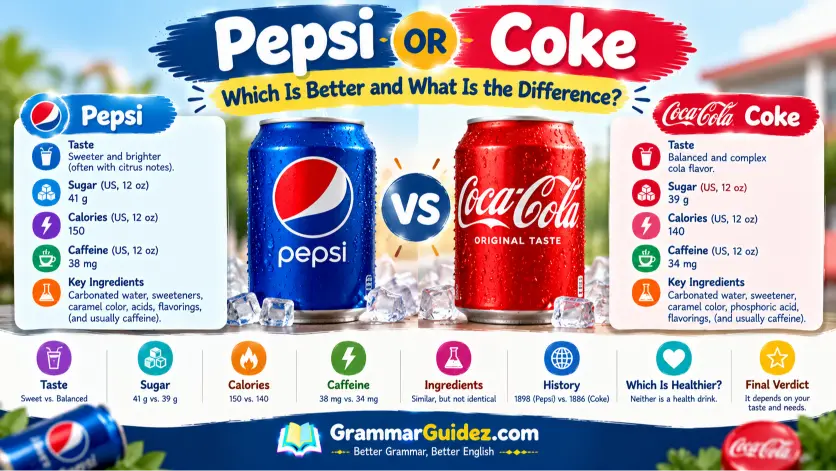
For example, the official US product information lists the following amounts for a 12-fluid-ounce serving:
| Nutrition fact | Regular Pepsi (US) | Coca-Cola Original (US) |
| Calories | 150 | 140 |
| Total sugar | 41 g | 39 g |
| Caffeine | 38 mg | 34 mg |
These figures are for the specified US products and serving size. They should not be applied automatically to bottles sold in Pakistan, the United Kingdom, or other countries.
A larger bottle naturally provides more sugar if you drink more of the same product. Sugar content may also differ when a company changes its formula or uses a different sweetener.
Why does sugar matter?
Sugar adds sweetness and energy to a drink. Drinking sugary beverages often can make it easier to consume more added sugar than intended.
For people who want to reduce their sugar intake, checking the nutrition label is more useful than choosing a drink based only on its brand.
Key point: On the cited US serving sizes, regular Pepsi contains slightly more sugar than regular Coca-Cola. Your local product label is the best source for the exact comparison.
3. Pepsi vs Coke: Which Has More Calories?
Calories measure the energy a food or drink provides. Regular Pepsi and regular Coke contain calories mainly because of their sweeteners.
In the US comparison above, a 12-fluid-ounce serving of Pepsi has 150 calories, while the same serving of Coca-Cola Original has 140 calories.
The difference is small for one serving, but serving size matters. A large bottle may contain several servings, so drinking the entire bottle can provide considerably more calories than drinking a small glass.
What about sugar-free versions?
Pepsi Zero Sugar and Coke Zero Sugar are designed to provide a cola taste with little or no sugar and very few calories. Exact nutrition values and formulas vary by market.
These products are not the same as their regular versions, and they may use different sweeteners.
If your goal is to reduce calorie intake, compare the nutrition labels of the exact products available to you. Do not assume that every product with the Pepsi or Coca-Cola name has the same nutritional profile.
4. Pepsi vs Coke: Which Has More Caffeine?
Caffeine is a naturally stimulating substance found in drinks such as coffee, tea, and many cola beverages.
Regular Pepsi and regular Coke usually contain caffeine. It can contribute to alertness, but some people are more sensitive to it than others.
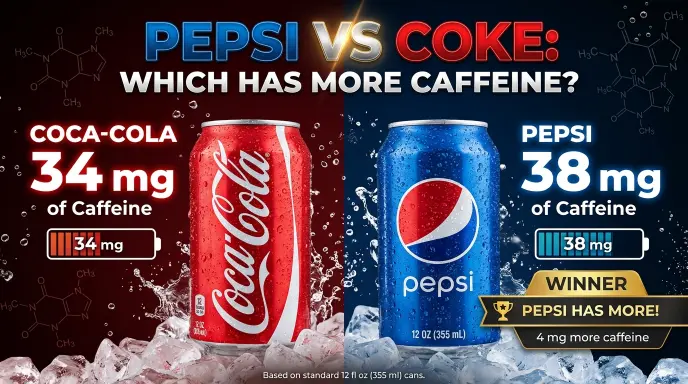
In the cited US comparison, a 12-fluid-ounce serving of Pepsi contains 38 milligrams of caffeine, while Coca-Cola Original contains 34 milligrams.
That means Pepsi has slightly more caffeine in this specific comparison. The difference is not necessarily the same for every country, bottle size, or product version.
Does caffeine affect everyone in the same way?
No. Some people can drink a caffeinated beverage without noticing much effect, while others may feel restless or have trouble sleeping.
Caffeine intake from all sources matters, not just cola. Coffee, tea, energy drinks, and some other products can add to your total daily intake.
If you want to avoid caffeine, look for a clearly labeled caffeine-free version where available. Do not assume that a sugar-free cola is also caffeine-free.
5. Are Pepsi and Coke Made With the Same Ingredients?
Pepsi and Coke share several basic ingredients, but their formulas are not identical in every market.
Both regular drinks commonly use:
- Carbonated water
- A sweetener
- Caramel color
- Acids that help create the drink’s taste
- Flavorings
- Caffeine, in most regular versions
The exact ingredients and their order on the label can vary. Some Pepsi ingredient lists include citric acid, while the cited US Coca-Cola Original list identifies phosphoric acid as its acid ingredient. Other countries may use different formulations or sweeteners.
What does carbonation do?
Carbonation means that carbon dioxide gas is dissolved in the drink. It creates the bubbles and fizzy sensation that people expect from cola.
What does caramel color do?
Caramel color gives the drinks their familiar dark appearance. It is used for color rather than being the main source of their taste.
Why are the flavor formulas different?
Each company develops its own recipe to create a recognizable flavor. Coca-Cola has stated that its specific natural flavorings are a trade secret.
The public ingredient list tells you which broad ingredients are present, but it does not reveal every detail of a company’s flavor formula.
6. Pepsi vs Coke: Which Is Healthier?

Neither regular Pepsi nor regular Coke should be considered a health drink. Both are sugary soft drinks, and drinking them frequently in large amounts can make it harder to manage your sugar intake.
It is also important not to call one drink healthier based only on a small difference in sugar or calories. The amount you drink and how often you drink it matter.
What should you consider?
Sugar: Check how many grams are in the amount you actually drink.
Calories: Compare the same serving size instead of comparing a small can with a large bottle.
Caffeine: Check the label if you are sensitive to caffeine or need to limit it.
Frequency: Drinking a sugary cola occasionally is different from drinking several large servings every day.
Alternatives: Water and unsweetened drinks can help reduce your intake of added sugar.
Are sugar-free versions healthier?
Sugar-free versions generally contain far less sugar and fewer calories than regular versions. That can be useful for people who want to reduce sugar intake.
However, sugar-free does not mean that every aspect of a drink is automatically beneficial. These drinks may still contain acids, caffeine, and other ingredients. The best choice depends on your needs and overall diet.
For most people, the most practical approach is to check the label, consider serving size, and avoid relying on soft drinks as the main source of hydration.
7. Which Is Better for Weight Management?
If you are watching your calorie intake, the amount you drink matters more than the logo on the bottle.
Regular Pepsi and regular Coke both provide calories from sugar. Choosing a smaller serving or drinking them less often can reduce the calories you get from these beverages.
Sugar-free versions contain very few calories compared with regular versions, but they should still be considered as part of your overall drinking habits.
Here are some simple tips:
- Choose a smaller bottle or can when possible.
- Check the serving size and calories on the label.
- Avoid assuming that one large bottle equals one serving.
- Drink water regularly throughout the day.
- Compare regular and sugar-free products separately.
There is no need to assume that Pepsi automatically causes more weight gain than Coke, or the other way around. Total intake, serving size, and your overall diet are more important than the brand alone.
8. Pepsi vs Coke: Which Has More Fizz?
Both drinks are carbonated, but people may describe their fizz differently.
Some people feel that Coke has a sharper or stronger fizzy sensation. Others find Pepsi just as fizzy or prefer the way its sweetness combines with the bubbles.
The sensation depends on more than the brand. It can change with the drink’s temperature, how recently the bottle was opened, the container, and how much carbonation remains.
A warm drink or an open bottle that has been sitting for a long time may taste less refreshing because it has lost some of its carbonation.
For a fair comparison, serve both drinks cold, open them at about the same time, and use similar glasses. This makes it easier to compare their bubbles and overall taste.
There is no need to claim that one brand is always fizzier in every situation. The actual experience can depend on the specific product and how it is served.
9. Pepsi vs Coke: A Brief History
Pepsi and Coca-Cola have long histories, but they began at different times.
The history of Coca-Cola
Coca-Cola was introduced in 1886 in Atlanta, Georgia. It grew from a local beverage into an internationally recognized soft drink.
Over the years, the company expanded its products, packaging, advertising, and distribution. The Coca-Cola name became closely associated with its distinctive logo, bottle designs, and global marketing.
The history of Pepsi
Pepsi began as a beverage created by pharmacist Caleb Bradham in 1893. It was first known as Brad’s Drink and was renamed Pepsi-Cola in 1898.
The brand developed through the twentieth century and became a major competitor in the cola market. Its marketing has included music, sports, celebrity partnerships, and other forms of entertainment.
Why are they rivals?
Both brands compete for consumers who enjoy cola drinks. Their rivalry is supported by advertising, product changes, brand identity, and consumer loyalty.
People may have a favorite because of taste, family habits, local availability, price, or memories associated with the brand.
The history of these companies explains why the question “Pepsi or Coke?” has remained familiar for generations.
10. Pepsi or Coke: Which Is More Popular?
Pepsi and Coca-Cola are both internationally recognized brands. However, popularity can mean several different things.
It may refer to global sales, sales in a particular country, brand recognition, or personal preference. The answer can change depending on which measure you use.
In some places, Pepsi may have a strong local following. In other places, Coca-Cola may be more commonly chosen. Local distribution, pricing, advertising, restaurant partnerships, and product availability can all influence buying habits.
A person may also choose Coke at a restaurant but buy Pepsi at home because of price or availability.
It is therefore too simple to say that one brand is always more popular everywhere. A useful comparison should specify the country, time period, and measure of popularity.
If you want to compare popularity in Pakistan, for example, local market research and recent sales data are more helpful than relying only on worldwide brand recognition.
11. Which Is Better With Food?
People often drink cola with meals, snacks, and fast food. Both Pepsi and Coke can be served with burgers, pizza, fried chicken, sandwiches, and other foods.
However, food pairing is a matter of personal taste.
Some people enjoy Pepsi’s sweeter flavor with salty foods. Others prefer the taste of Coke with a meal. The food itself can also change how sweet or acidic the drink seems.
If you are choosing a drink for a meal, consider these simple points:
- For a burger: Try both and see which flavor you prefer with the meat and sauces.
- For pizza: Compare how each drink tastes with the salty cheese and toppings.
- For spicy food: A cold, fizzy drink may feel refreshing, but individual preferences differ.
- For a sweet dessert: You may prefer a less sweet drink to balance the meal.
There is no scientific rule that says one cola must go with a particular food. Choose based on taste, availability, and your nutritional preferences.
12. Pepsi Zero Sugar vs Coke Zero Sugar
Regular Pepsi and regular Coke are different from their zero-sugar versions. This distinction matters because some people compare the original drinks while others compare the sugar-free alternatives.
Pepsi Zero Sugar is designed to offer a Pepsi-style cola taste without sugar. Coke Zero Sugar is designed to provide a Coca-Cola-style taste without sugar.
Both use sweeteners instead of the sugar found in regular versions. The specific sweeteners and ingredient lists depend on the country and formula.
Which zero-sugar drink tastes better?
Some people prefer Pepsi Zero Sugar, while others prefer Coke Zero Sugar. Their taste may differ from the regular versions, so liking one original drink does not guarantee that you will prefer its sugar-free counterpart.
If you want to compare them, try the same serving size at the same temperature. Look at the nutrition labels as well as the taste.
Remember that zero sugar does not always mean zero caffeine. Check the package if caffeine is a concern.
13. Common Myths About Pepsi and Coke

Myth 1: Pepsi is always sweeter than Coke
Pepsi is often described as sweeter, but perceived sweetness can depend on the recipe, country, temperature, and individual taste. Nutrition labels can compare sugar amounts, but they do not fully explain how sweet a drink tastes.
Myth 2: Coke contains no sugar
Regular Coca-Cola contains sugar or another listed sweetener, depending on the market. Coke Zero Sugar is a separate product.
Myth 3: Pepsi always has more caffeine
Some commonly compared US products show slightly more caffeine in Pepsi. However, formulas and serving sizes differ. Check the labels for the specific drinks you are comparing.
Myth 4: Sugar-free cola is the same as regular cola
They may have similar brand flavors, but their formulas and nutrition facts are different. Sugar-free versions use alternative sweeteners and usually have far fewer calories.
Myth 5: One brand is the best for everyone
Taste and personal preference vary. Nutritional needs also differ. There is no universal winner for every person or every situation.
14. How to Choose Between Pepsi and Coke
If you are still unsure which drink to choose, use a simple comparison.
- Think about taste. Do you prefer a sweeter flavor or a different balance of cola notes?
- Check the nutrition label. Compare the same serving size.
- Consider caffeine. Look at the listed amount if you want to limit it.
- Compare the product versions. Regular, diet, and zero-sugar colas are not interchangeable.
- Consider the price and availability. Choose the option that fits your budget and is easy to find.
- Try a blind taste test. Compare both drinks without seeing the brand labels.
This approach helps you make a choice based on your own preferences rather than advertising or other people’s opinions.
Fill in the Blanks
Complete each sentence with the correct word or phrase.
- Pepsi is a brand owned by __________.
- Coca-Cola was introduced in the year __________.
- Both regular Pepsi and regular Coke are __________ drinks.
- The amount of sugar can vary by country and __________ size.
- Pepsi Zero Sugar is designed to contain no __________.
Answers
- PepsiCo
- 1886
- Carbonated
- Serving
- Sugar
Mini Quiz: Pepsi or Coke?
Choose the correct answer for each question.
1. Which company makes Pepsi?
A. The Coca-Cola Company
B. PepsiCo
C. Nestlé
D. Unilever
Answer: B. PepsiCo
2. Which drink was introduced in 1886?
A. Pepsi
B. Coca-Cola
C. Both drinks
D. Neither drink
Answer: B. Coca-Cola
3. Which statement about Pepsi and Coke is correct?
A. They are made by the same company.
B. Both are cola soft drinks.
C. Both always have identical ingredients.
D. Neither can contain caffeine.
Answer: B. Both are cola soft drinks.
4. What should you compare to check which drink contains more sugar?
A. The color of the bottle
B. The company logo
C. The nutrition labels for equal serving sizes
D. The shape of the can
Answer: C. The nutrition labels for equal serving sizes
5. Which statement about taste is correct?
A. Everyone prefers Pepsi.
B. Everyone prefers Coke.
C. Taste preferences differ from person to person.
D. Both drinks taste exactly the same.
Answer: C. Taste preferences differ from person to person.
FAQs
1. Is Pepsi or Coke better?
Neither is better for everyone. Pepsi is often described as sweeter, while Coke is often described as having a balanced and complex cola flavor. The best choice depends on your taste and what matters to you.
2. Which has more sugar, Pepsi or Coke?
In the cited US comparison, a 12-fluid-ounce serving of regular Pepsi contains 41 grams of sugar, while Coca-Cola Original contains 39 grams. The figures may differ in other countries, so check the local label.
3. Which has more caffeine, Pepsi or Coke?
In the cited US comparison, Pepsi contains 38 milligrams of caffeine per 12-fluid-ounce serving, while Coca-Cola Original contains 34 milligrams. Other versions and markets may have different amounts.
4. Which has more calories?
The cited US serving of regular Pepsi has 150 calories, compared with 140 calories for Coca-Cola Original. The difference depends on the product formula and serving size.
5. Is Coke healthier than Pepsi?
Neither regular drink is a health drink. Both can contain a lot of sugar. Compare their labels, consider how much you drink, and choose water or unsweetened beverages more often if you want to reduce added sugar.
6. Does Pepsi taste sweeter than Coke?
Many people describe Pepsi as sweeter or more citrus-forward. However, taste is subjective, and the recipes may vary between countries.
7. Are Pepsi and Coke made by the same company?
No. Pepsi is a PepsiCo brand, while Coca-Cola is made by The Coca-Cola Company. They are separate companies that compete in the soft drink market.
8. Do Pepsi and Coke contain caffeine?
Most regular versions contain caffeine. The amount varies by product and serving size. Some caffeine-free products may be available in certain markets.
9. Is Pepsi Zero Sugar the same as Diet Pepsi?
No. They are different products with different formulas and taste profiles. Both are designed to reduce or eliminate sugar, but their ingredients may differ.
10. Can I drink Pepsi or Coke every day?
Your overall diet and the amount you drink matter. Regular cola can add substantial sugar to your daily intake. Drinking smaller amounts less often and choosing water more frequently can help you manage sugar consumption.
Conclusion
Pepsi or Coke is a choice that depends on taste, nutrition, and personal preference. Pepsi is often described as sweeter and brighter, while Coke is often described as having a balanced and complex cola flavor. Both are popular carbonated soft drinks, and both have their own history, ingredients, and loyal fans.
Nutrition is another important part of the comparison. In the cited US serving sizes, regular Pepsi has slightly more sugar, calories, and caffeine than Coca-Cola Original. However, recipes can vary by country, so the label on your local product is the best source of information.
If you want to find your favorite, try both drinks under the same conditions and compare their taste. If sugar or caffeine matters to you, check the nutrition facts before choosing.
In the end, there is no single winner for everyone. The best choice is the one that matches your taste and fits your personal needs.
Read More: Sweet or Sweat: Which Word Is Correct?

I am Evan Whitmore, an English language writer and the person who started GrammarGuidez.com. I made GrammarGuidez.com to make grammar, spelling, vocabulary and words that are often confused easier to understand.
I like taking to understand English words and grammar rules and turning them into simple and clear explanations. My aim is to help students, writers, bloggers, ESL learners and regular English speakers feel more sure when they write and talk.
At GrammarGuidez.com I work on real life examples easy to understand explanations comparing words, spelling changes and how American English is used every day.
I think learning English doesn’t need to be hard. A good explanation and some good examples can make tough grammar topics much simpler to learn