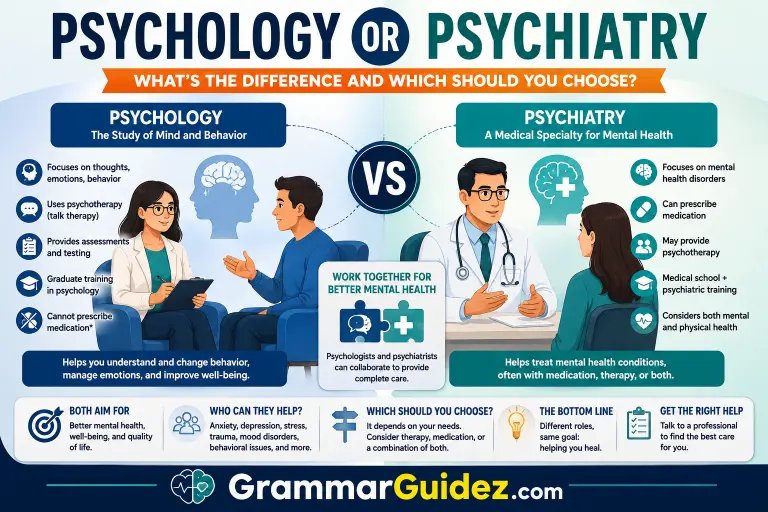
“Psychology” and “psychiatry” are both fields related to mental health, but they focus on different areas. “Psychology” is the study of the mind, behavior, and emotions, while “psychiatry” is a medical field focused on diagnosing and treating mental health disorders, including through medication when appropriate.
When people look for help with mental or emotional problems, they often ask: psychology or psychiatry which one is right for me?
The two fields are closely related, but they are not the same. Both focus on mental health, thoughts, emotions, and behavior. However, their education, training, and treatment methods are different.
Psychology is the study of the mind and behavior. Psychologists may assess mental and emotional concerns and provide psychotherapy, also called talk therapy. The American Psychological Association describes psychology as the study of the mind and behavior and notes that psychologists work across research and mental health settings.
Psychiatry is a medical specialty. Psychiatrists are medical doctors who receive specialized training in mental health. They can diagnose mental health conditions and prescribe medication. They may also provide psychotherapy.
This guide explains psychology or psychiatry, including their meanings, differences, training, treatments, examples, and when each may be appropriate.
Psychology or Psychiatry – Quick Answer
Psychiatry and Psychology both deal with mental health, but they come from different professional backgrounds.
Psychology focuses strongly on human thoughts, feelings, behavior, assessment, and psychotherapy. Psychologists receive graduate training in psychology and may provide different forms of talk therapy.
Psychiatry is a branch of medicine. Psychiatrists attend medical school and then complete specialized psychiatric training. Because they are medical doctors, psychiatrists can prescribe medication. They may also use psychotherapy as part of treatment.
A simple way to remember it is:
Psychology focuses on the mind and behavior. Psychiatry is a medical specialty focused on mental health and its treatment.
The two professions can also work together.
What Does Psychology Mean?
Definition of Psychology
Psychology is the scientific study of the mind and behavior.
It covers many areas. These include learning, memory, emotions, personality, development, relationships, behavior, and mental health.
Psychology is much broader than therapy. Some psychologists work in schools, universities, research centers, businesses, hospitals, and other settings.
The APA explains that psychology covers the human experience from brain functions and individual behavior to wider social behavior.
What Does a Psychologist Do?
A psychologist may:
- Assess thoughts, emotions, and behavior
- Conduct psychological testing
- Provide psychotherapy
- Help people manage emotional problems
- Study behavior and mental processes
- Work with individuals, couples, families, or groups
- Conduct research
- Work in education or organizational settings
Clinical psychologists may assess and treat mental, emotional, and behavioral disorders and use psychological science to support change and resilience.
Example
Someone struggling with anxiety may work with a psychologist to understand patterns of thinking and learn skills to manage difficult thoughts and emotions.
What Does Psychiatry Mean?
Definition of Psychiatry
Psychiatry is the medical specialty concerned with mental, emotional, and behavioral disorders.
A psychiatrist is a medical doctor who completes additional specialized training in psychiatry.
Psychiatrists can evaluate mental health conditions and use different treatments. These can include medication, psychotherapy, or a combination of approaches.
What Does a Psychiatrist Do?
A psychiatrist may:
- Evaluate mental health conditions
- Diagnose mental disorders
- Prescribe medication
- Monitor medication effects
- Provide psychotherapy
- Consider physical and biological factors
- Coordinate care with other health professionals
Because psychiatrists have medical training, they can consider both mental health and physical health when evaluating a person.
What Is the Difference Between Psychology and Psychiatry?
The biggest difference is professional training.
Psychologists train in psychology. Psychiatrists train as medical doctors and then specialize in psychiatry.
| Feature | Psychology | Psychiatry |
| Main field | Psychology | Medicine |
| Professional | Psychologist | Psychiatrist |
| Medical doctor | Usually no | Yes |
| Main focus | Mind, behavior, emotions | Mental health and medical aspects |
| Psychotherapy | Yes, for trained providers | Some psychiatrists provide it |
| Medication | Usually cannot prescribe | Can prescribe |
| Psychological testing | Can be part of practice | May use other assessments |
| Research | Common | Common |
| Treatment approach | Often psychotherapy | Medication, psychotherapy, or both |
| Training path | Graduate psychology training | Medical school + psychiatric training |
The exact scope of practice can vary by country and local licensing laws. For example, the APA notes that psychologists in some U.S. states may prescribe psychiatric medication after additional training, although this is not common across most states.
Psychology vs Psychiatry: Training
Psychology Training
Psychologists generally complete graduate education in psychology.
For clinical psychology, training may include:
- Human behavior
- Psychological assessment
- Research methods
- Statistics
- Psychotherapy
- Ethics
- Clinical practice
The APA notes that doctoral psychology programs can include several years of academic preparation followed by supervised clinical experience and licensing requirements.
Training requirements vary depending on the country, profession, and specialty.
Psychiatry Training
Psychiatrists first train as medical doctors.
After medical school, they complete specialized psychiatric training. Their education includes medical science as well as the diagnosis and treatment of mental health conditions.
The APA states that psychiatrists earn an MD or DO and then complete additional specialized residency training in psychiatry.
This medical background is one of the clearest differences between psychology and psychiatry.
Psychology or Psychiatry for Therapy?
Both psychologists and psychiatrists may provide psychotherapy, but psychologists often focus heavily on psychological therapies.
Psychotherapy can help people understand thoughts, emotions, and behavior and develop healthier ways to respond to problems.
There are many approaches to psychotherapy. The APA lists broad groups that include psychodynamic, behavioral, cognitive, humanistic, and other approaches.
A person seeking therapy does not automatically need a psychiatrist.
A psychologist or another qualified mental health professional may be appropriate for many concerns.
Psychology or Psychiatry for Medication?
This is where the difference becomes especially clear.
Psychiatrists can prescribe medication because they are medical doctors.
Psychologists generally do not prescribe medication. However, prescribing authority can depend on local laws, and the APA notes that a limited number of U.S. states allow specially trained psychologists to prescribe certain psychiatric medications.
If medication may be useful, a psychiatrist or another qualified medical professional may be involved.
Sometimes medication and psychotherapy are used together. The APA notes that medication, psychotherapy, or their combination may help with different emotional or behavioral problems, depending on the situation.
British English vs American English
The words psychology, psychologist, psychiatry, and psychiatrist are used in both British and American English.
The main difference is not spelling.
| Region | Psychology | Psychiatry |
| United States | Psychology | Psychiatry |
| United Kingdom | Psychology | Psychiatry |
| Canada | Psychology | Psychiatry |
| Australia | Psychology | Psychiatry |
| International English | Psychology | Psychiatry |
The professional roles and licensing rules can differ between countries, so readers should not assume that training or prescribing rules are identical everywhere.
Which One Should You Choose?
There is no single answer for everyone.
Your choice depends on the type of support you need and the services available in your area.
Choose a Psychologist When You Want Therapy
A psychologist may be a good option when you want to:
- Understand your thoughts and feelings
- Work on behavior patterns
- Learn coping skills
- Explore relationship problems
- Work through stressful life events
- Receive psychotherapy
- Complete a psychological assessment
Psychologists can help with a wide range of emotional and behavioral concerns.
Consider a Psychiatrist When Medication May Be Needed
A psychiatrist may be appropriate when a medical evaluation or medication management is needed.
This can be especially relevant when symptoms are severe, persistent, complicated, or not improving with another approach. Healthdirect notes that psychiatrists can diagnose mental illness and manage treatment that may include medicines.
Sometimes You May Need Both
Psychology and psychiatry do not have to compete.
A person may receive psychotherapy from a psychologist while seeing a psychiatrist for medication management.
These professionals can work together as part of a broader mental health care plan. The APA notes that psychologists, psychiatrists, and other professionals may all provide psychotherapy and can have different roles in care.
Common Mistakes
Mistake 1: Thinking Psychology and Psychiatry Are the Same
❌ “A psychologist and psychiatrist are the same job.”
✅ “Psychologists and psychiatrists are different professionals who both work in mental health.”
Their education and roles are different.
Mistake 2: Thinking Psychologists Are Medical Doctors
❌ “Every psychologist is a medical doctor.”
✅ “Psychologists are trained in psychology; psychiatrists are medical doctors.”
The APA identifies psychiatry as a medical profession and describes psychiatrists as physicians with specialized psychiatric training.
Mistake 3: Assuming Psychiatrists Only Prescribe Medication
❌ “Psychiatrists only give medicine.”
✅ “Psychiatrists can use medication and may also provide psychotherapy.”
Some psychiatrists provide talk therapy as part of their work.
Mistake 4: Thinking Psychology Only Means Therapy
❌ “Psychology is just counseling.”
✅ “Psychology is a broad field that studies the mind and behavior.”
Psychologists may work in research, education, health care, organizations, and other settings.
Everyday Examples
Example 1: Stress
Someone is having trouble managing stress at work.
A psychologist may help the person identify thought and behavior patterns and develop useful coping strategies.
Example 2: Medication Management
Someone has a mental health condition that may require medication.
A psychiatrist can evaluate the condition and, where appropriate, prescribe and monitor medication.
Example 3: Therapy and Medication
Someone may benefit from both psychotherapy and medication.
In that situation, a psychologist and psychiatrist may work as part of the person’s care team.
Example 4: Psychological Assessment
A person may need a detailed assessment of cognitive, emotional, or behavioral functioning.
A qualified psychologist may conduct psychological testing or assessment, depending on their training and local scope of practice.
Psychology or Psychiatry: A Simple Memory Trick
Use this easy rule:
Psychology = mind + behavior
Psychiatry = medicine + mental health
Another simple way to remember it:
- Psychologist → psychology
- Psychiatrist → medical doctor specializing in psychiatry
- Psychotherapy → talking treatment
- Psychiatric medication → commonly managed by psychiatrists
Remember that real-world roles can overlap. Both psychologists and psychiatrists may provide psychotherapy.
Quiz
1. What is psychology mainly concerned with?
A. Only medication
B. The mind and behavior
C. Only physical injuries
D. Surgery
2. What is a psychiatrist?
A. A medical doctor specializing in mental health
B. A school teacher
C. A social worker
D. A laboratory technician
3. Who can generally prescribe psychiatric medication?
A. Psychiatrists
B. All psychologists
C. Teachers
D. Coaches
4. Which field is broader than clinical therapy alone?
A. Psychology
B. Psychiatry only
C. Pharmacy only
D. Surgery
5. Can psychiatrists provide psychotherapy?
A. No
B. Yes
C. Only in schools
D. Never
6. What is psychotherapy?
A. A talking treatment
B. A surgical procedure
C. A blood test
D. An X-ray
7. Which professional receives medical training?
A. Psychiatrist
B. Psychologist
C. Both always receive identical training
D. Neither
8. Can psychology and psychiatry work together?
A. No
B. Yes
C. Only online
D. Only in research
Answers
- B
- A
- A
- A
- B
- A
- A
- B
Fill in the Blanks
- Psychology is the study of the mind and ______.
- A psychiatrist is a ______ doctor.
- Psychologists may provide ______.
- Psychiatrists can generally prescribe ______.
- Psychology and psychiatry are related but ______ fields.
- Psychotherapy is often called ______ therapy.
- Psychiatrists complete specialized training after ______ school.
- Psychology includes the study of thoughts, emotions, and ______.
Answers
- behavior
- medical
- psychotherapy
- medication
- different
- talking
- medical
- behavior
FAQs
What is the main difference between psychology and psychiatry?
The main difference is their professional training. Psychology focuses on the mind, behavior, assessment, and psychological treatment. Psychiatry is a medical specialty. Psychiatrists are medical doctors who can prescribe medication and may also provide psychotherapy. Both fields can help people with mental health concerns, and professionals from both fields may work together.
Is a psychologist a doctor?
A psychologist may hold a doctoral degree, such as a PhD or PsyD, but that does not make the person a medical doctor. Psychologists receive specialized training in psychology. Psychiatrists, in contrast, attend medical school and become physicians before completing specialized psychiatric training. Professional titles and requirements can vary by country.
Can a psychologist prescribe medication?
In most places, psychologists cannot prescribe medication. However, prescribing rules depend on local law. The APA notes that some U.S. states allow specially trained psychologists to prescribe psychiatric medications, while this is not the usual arrangement in most states. Always check the rules that apply in your location.
Is psychiatry better than psychology?
Neither field is simply “better.” They serve different roles. Psychology may be especially useful when psychotherapy, behavioral support, or psychological assessment is needed. Psychiatry may be useful when medical evaluation or medication management is needed. Sometimes both are helpful. The right professional depends on the person’s needs and local health care system.
Should I see a psychologist or psychiatrist for anxiety?
It depends on the nature and severity of the problem. A psychologist may help with anxiety through psychotherapy and coping strategies. A psychiatrist can also evaluate mental health conditions and may use medication when appropriate. A primary care doctor or qualified mental health professional can help determine what type of care is suitable.
Can psychiatrists do therapy?
Yes. Psychiatrists can provide psychotherapy, although their practice may focus more heavily on medical evaluation and medication management. The APA notes that psychiatrists, psychologists, and other qualified professionals can provide psychotherapy, depending on their training and practice.
Is psychology only about mental illness?
No. Psychology is much broader than mental illness. It studies how people think, learn, remember, feel, develop, and behave. Psychologists may work in research, education, health care, organizations, and many other areas.
Can psychology and psychiatry be used together?
Yes. A person may receive psychotherapy from a psychologist while receiving medication management from a psychiatrist. Collaboration can be useful when different types of care are needed. Treatment should be based on the person’s needs, available evidence, and professional assessment.
Conclusion
The choice between psychology or psychiatry becomes easier once you understand their main differences.
Psychology is the study of the mind and behavior. Psychologists may provide psychotherapy, psychological assessments, and other forms of psychological care. Psychology also includes research, education, and many non-clinical areas.
Psychiatry is a medical specialty. Psychiatrists are medical doctors who receive additional training in mental health. They can diagnose mental health conditions, prescribe medication, and may provide psychotherapy.
The two fields are not rivals. In many situations, they complement each other.
If you mainly want help understanding thoughts, emotions, or behavior and working through them with therapy, a qualified psychologist may be useful. If medical evaluation or medication may be needed, a psychiatrist may be appropriate. In some cases, both professionals can be involved.
The key is not to ask which field is “better.” Ask which type of professional matches the support you need.

I am Evan Whitmore, an English language writer and the person who started GrammarGuidez.com. I made GrammarGuidez.com to make grammar, spelling, vocabulary and words that are often confused easier to understand.
I like taking to understand English words and grammar rules and turning them into simple and clear explanations. My aim is to help students, writers, bloggers, ESL learners and regular English speakers feel more sure when they write and talk.
At GrammarGuidez.com I work on real life examples easy to understand explanations comparing words, spelling changes and how American English is used every day.
I think learning English doesn’t need to be hard. A good explanation and some good examples can make tough grammar topics much simpler to learn