Heads or Tails: Meaning, Difference, and How to Use the Phrase
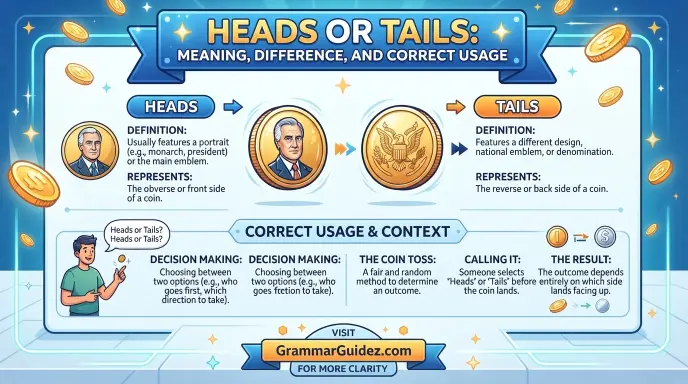
“Heads” and “tails” are both correct words, but they have different meanings when referring to a coin. “Heads” is the ...
Read more
Wane or Wain: What’s the Difference and Which Word Is Correct?
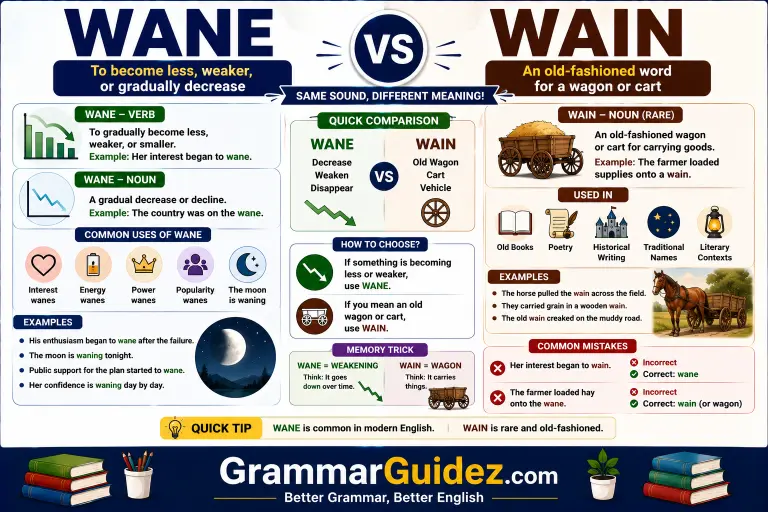
Wane or wain? These two English words look very similar, but they have completely different meanings and uses. The main ...
Read more
Dam or Damn: What’s the Difference and Which Word Should You Use?
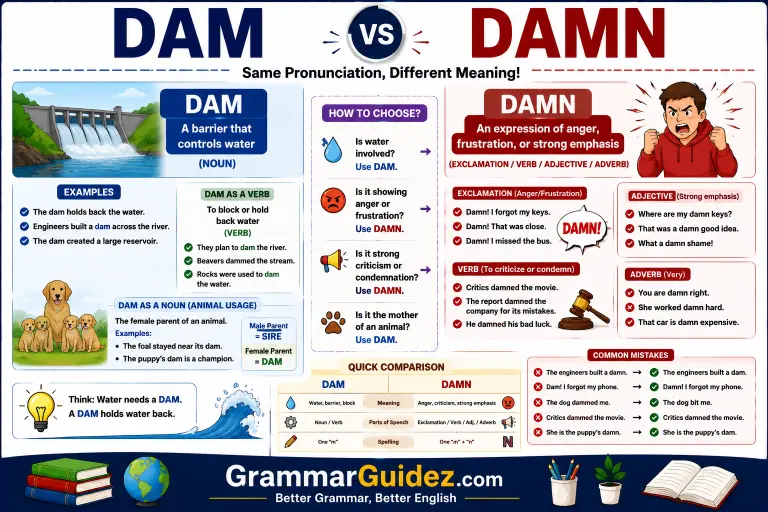
“Dam” and “damn” are both correct words, but they have very different meanings. “Dam” is a noun meaning a barrier ...
Read more
Bit or Bite: What’s the Difference and Which Is Correct?
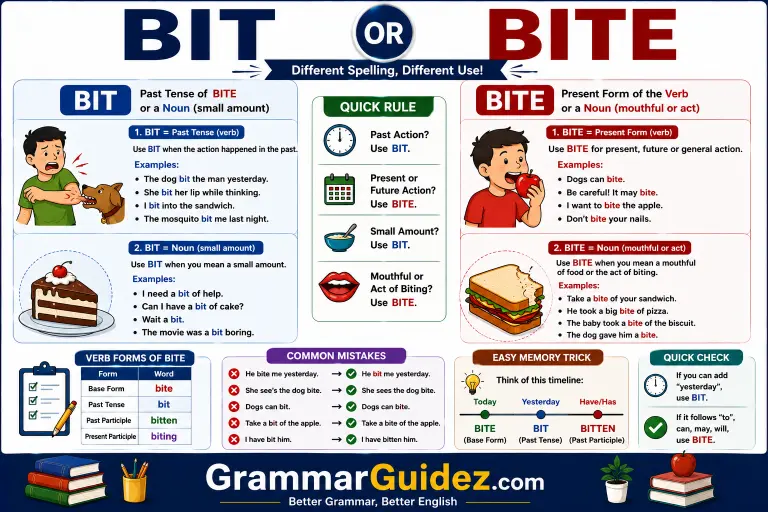
“Bit” and “bite” are both correct words, but they are used differently. “Bite” is usually a verb meaning to use ...
Read more
Organising or Organizing: Which Spelling Is Correct?
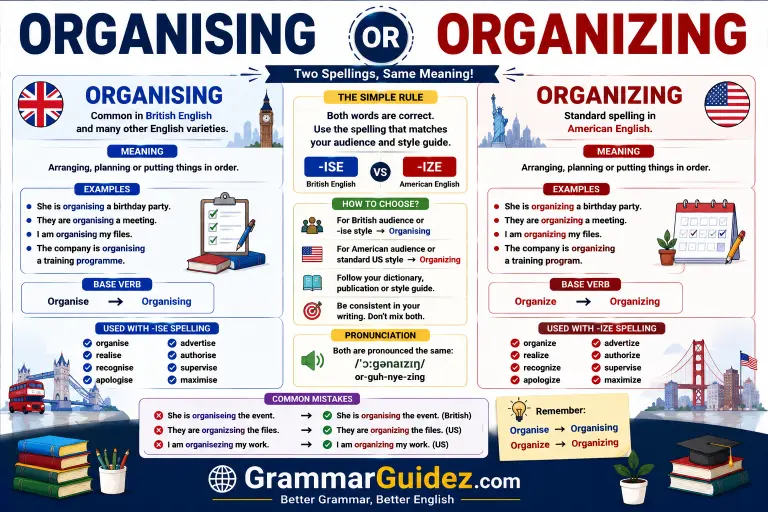
“Organising” and “organizing” are both correct spellings, but their usage depends on the variety of English. “Organizing” is the standard ...
Read more
Prove or Proof: What Is the Difference and Which One Should You Use?
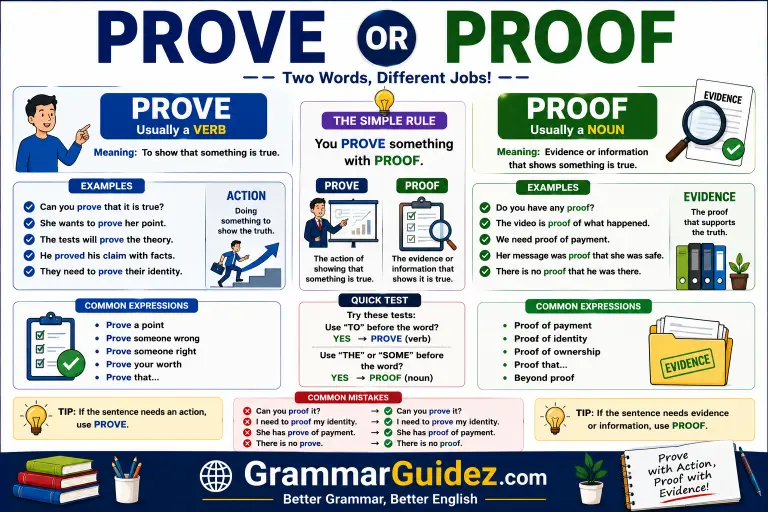
“Prove” and “proof” are both correct words, but they have different meanings and grammatical uses. “Prove” is a verb meaning ...
Read more
Ms or Mrs: What Is the Difference and Which One Should You Use?
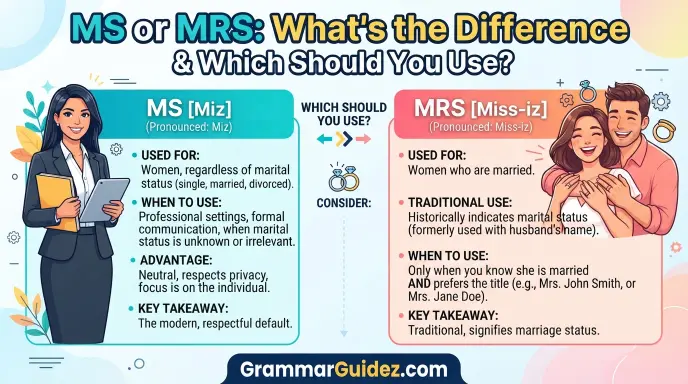
“Ms.” and “Mrs.” are both correct titles for women, but they are used differently. “Ms.” is a neutral title that ...
Read more
Lead or Led: What’s the Difference and Which One Is Correct?
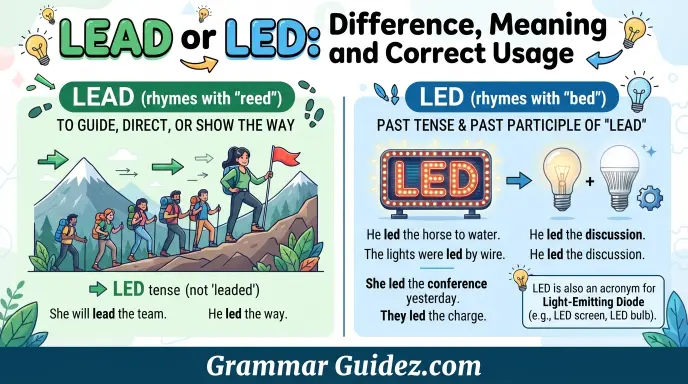
“Lead” and “led” are both correct words, but they are used in different contexts. “Lead” is usually the present tense ...
Read more
Layed or Laid: Which Is Correct and Why?
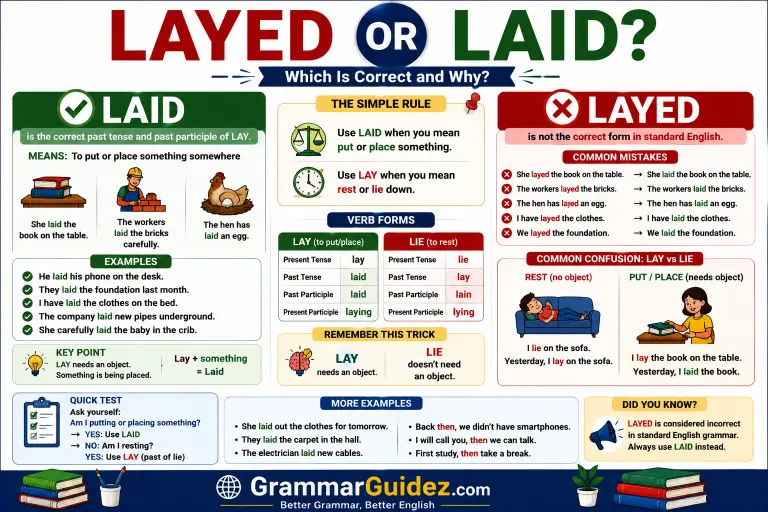
“Laid” is the correct past tense and past participle of “lay,” while “layed” is generally incorrect in standard English. “Laid” ...
Read more
Then or Than: What Is the Difference and How Do You Use Them?
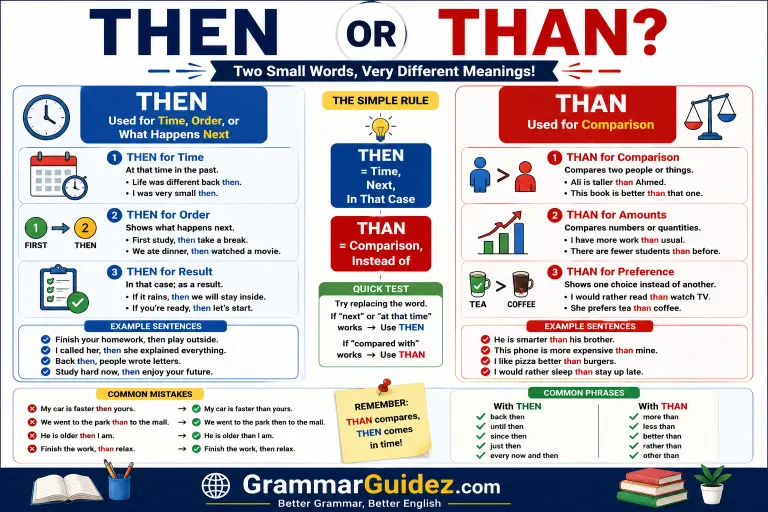
“Then” and “than” are both correct words, but they have different meanings. “Then” is an adverb used to refer to ...
Read more