Apposed or Opposed: What’s the Difference?
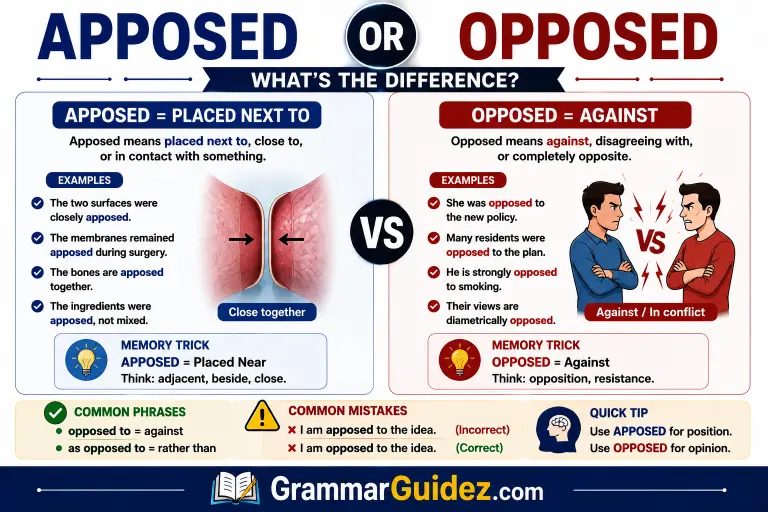
“Apposed” and “opposed” are both correct words, but they have very different meanings. “Apposed” means placed next to or brought ...
Read more
As or Like: What’s the Difference and When Should You Use Each?
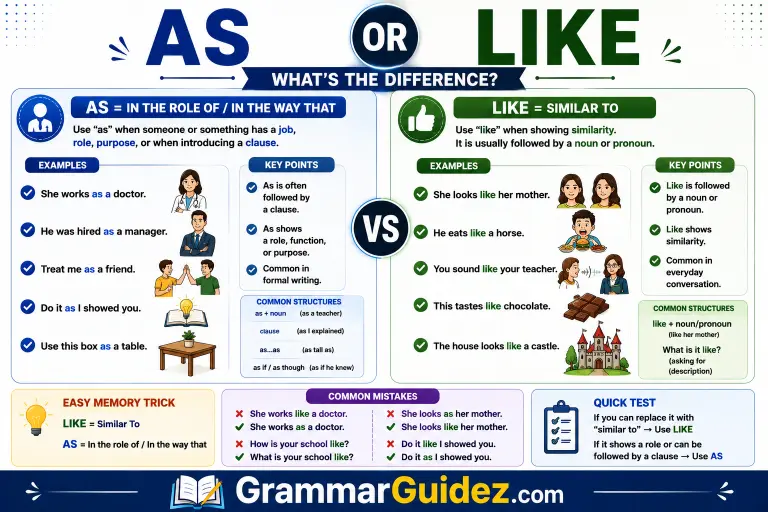
“As” and “like” are both correct words, but they are used differently. “As” is commonly used as a conjunction meaning ...
Read more
Non or None: What’s the Difference and How Do You Use Them?
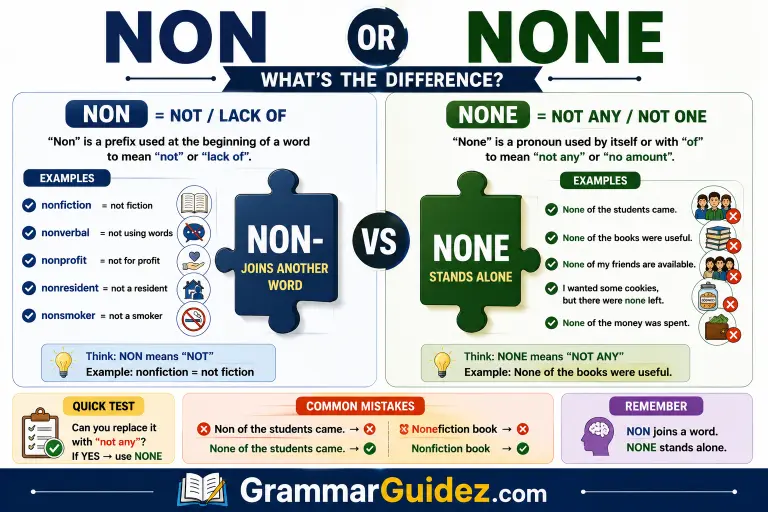
“Non” and “none” are both correct words, but they have different meanings. “Non” is a prefix meaning not or without, ...
Read more
Erk or Irk: What’s the Difference?
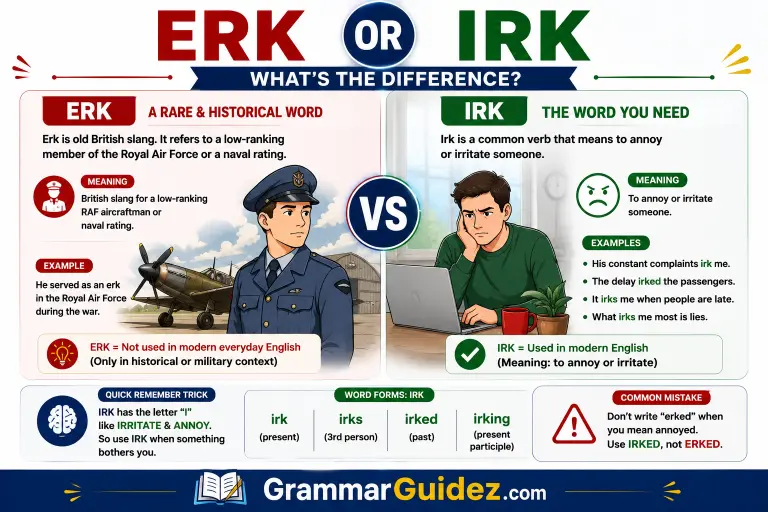
“Irk” is the correct spelling, while “erk” is generally a misspelling when you mean to annoy or irritate someone. “Irk” ...
Read more
Focusing or Focussing: Which Spelling Should You Use?
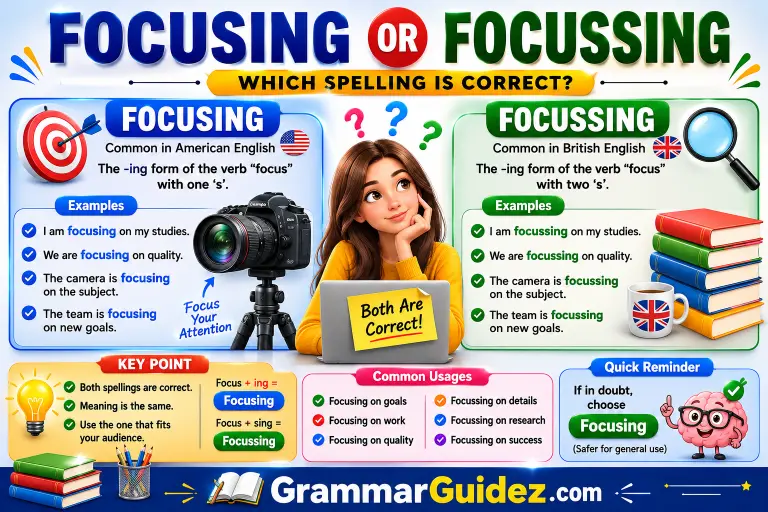
“Focusing” and “focussing” are both correct spellings, but their usage depends on the variety of English. “Focusing” is the standard ...
Read more
Mopped or Moped: What Is the Difference?
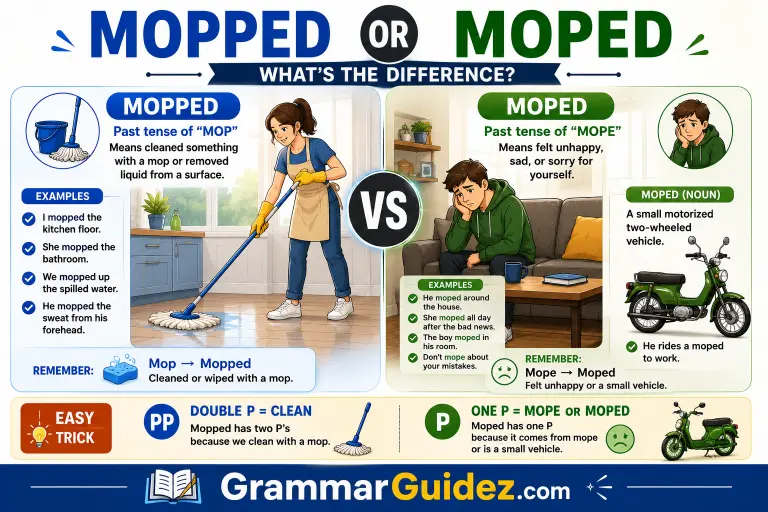
“Mopped” and “moped” are both correct words, but they have different meanings. “Mopped” is the past tense of mop, meaning ...
Read more
Reoccurring or Recurring: What Is the Difference?
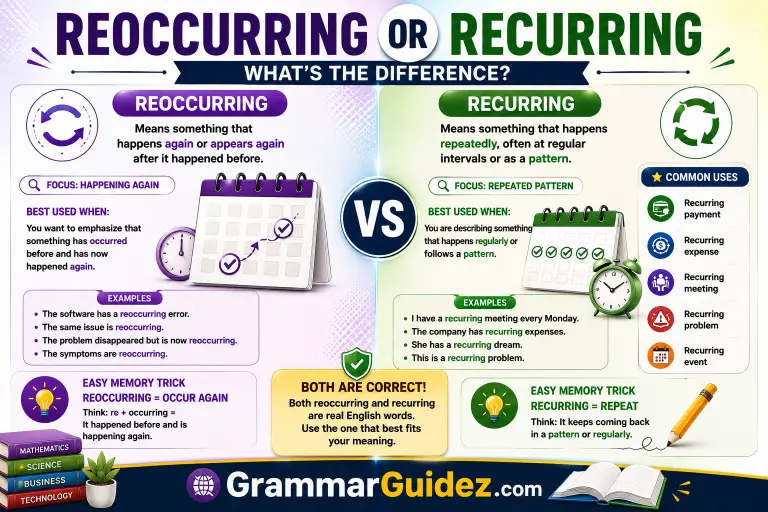
“Recurring” and “reoccurring” are both correct words, but they have slightly different meanings. “Recurring” means happening repeatedly or regularly, while ...
Read more
Formulae or Formulas: Which Plural Is Correct?
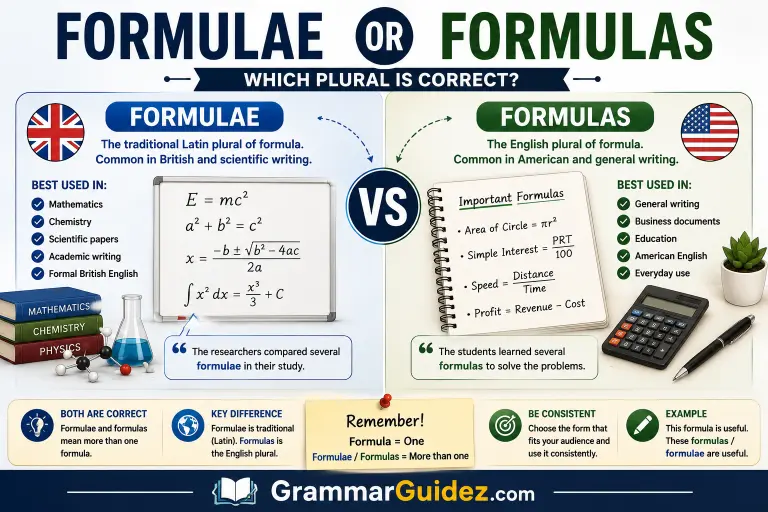
“Formulae” and “formulas” are both correct plural forms, but their usage depends on context and style. “Formulas” is the more ...
Read more
Follow or Fallow: What’s the Difference and Which One Should You Use?
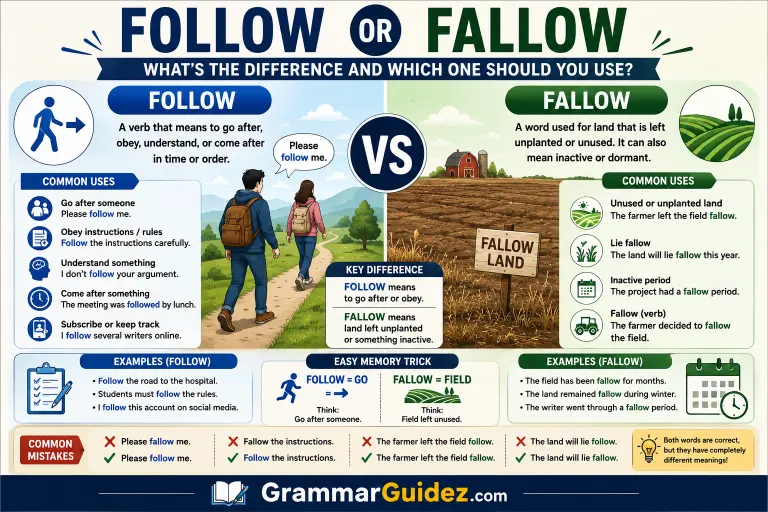
“Follow” and “fallow” are both correct words, but they have different meanings. “Follow” is a verb meaning to go after ...
Read more
Collectables or Collectibles: What’s the Difference?
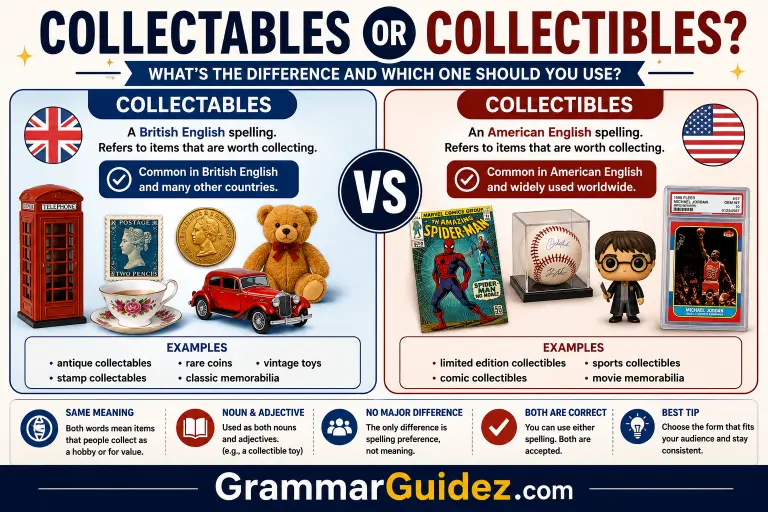
“Collectibles” and “collectables” are both correct spellings, but “collectibles” is more common, especially in American English. “Collectibles” are items valued ...
Read more